Unpacking Cross-Border Data Flows That Shape Reel Incentive Allocations in Digital Gaming Networks
Anna Beck · Jun 28, 2026

Unpacking Cross-Border Data Flows That Shape Reel Incentive Allocations in Digital Gaming Networks
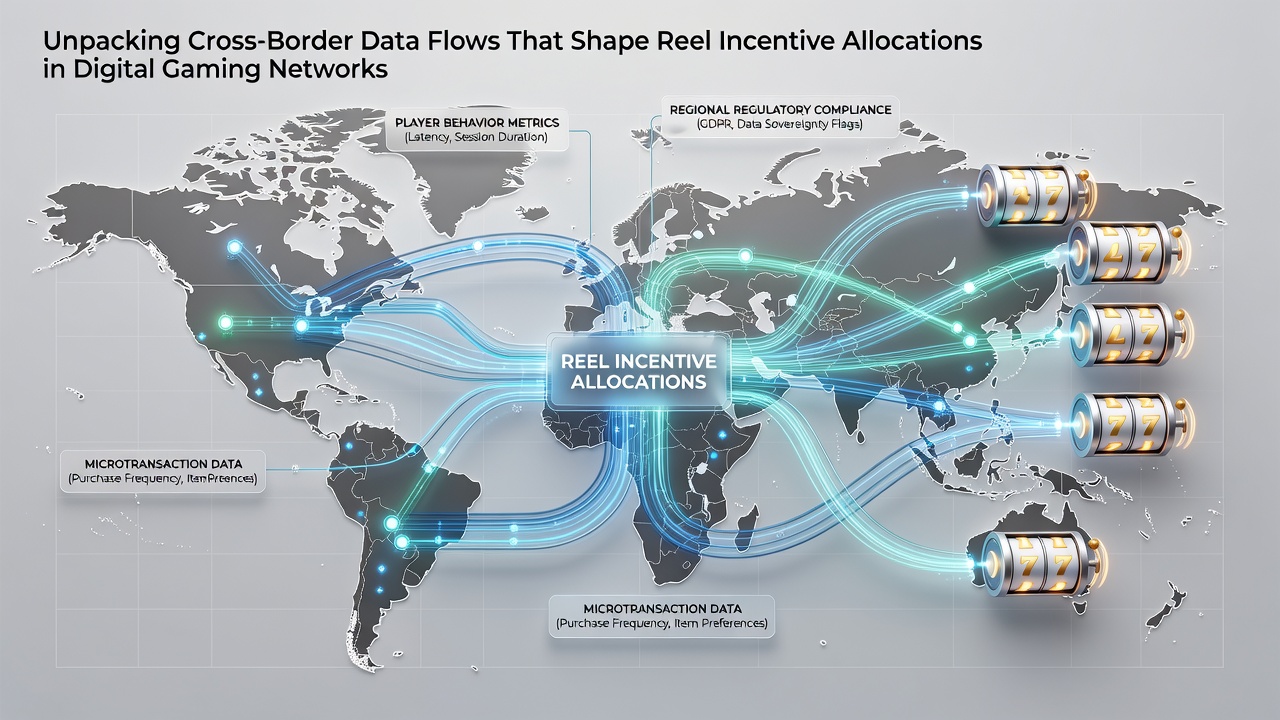
Cross-border data flows sit at the center of how digital gaming networks decide which reel incentives reach individual players, and these movements of information determine everything from free spin quantities to personalized multiplier offers across different jurisdictions. Companies collect behavioral metrics such as spin frequency, bet sizing patterns, and session durations, then route those datasets through servers located in multiple countries before algorithms finalize reward tiers, and the process requires compliance with varying data protection rules that can alter allocation speed and precision.
Regulatory Frameworks Governing Data Movement
Legislation in different regions sets strict parameters on how player information travels outside national boundaries, and operators must segment datasets according to consent levels and localization mandates before any incentive calculation begins. The European Union's data protection standards, for instance, require explicit approval for transfers to non-adequate countries, which forces gaming platforms to build separate processing pipelines for European users versus those in other markets. Observers note that similar requirements appear in Canada's Personal Information Protection and Electronic Documents Act, where organizations must demonstrate comparable protection levels before moving records abroad for analytics purposes.
Data localization statutes in several Asian markets further complicate the picture because they compel companies to store core player profiles within domestic borders even while ancillary metrics flow to centralized modeling hubs. This split creates delays in real-time reward adjustments since systems must first reconcile localized and international data streams, and June 2026 brings anticipated updates to transatlantic data transfer mechanisms that many platforms are already testing in pilot environments.
How Data Flows Influence Incentive Calculations
Algorithms rely on aggregated datasets that cross multiple borders to predict which reel incentives will maximize both player retention and operator margins, and the accuracy of these predictions drops when regulatory blocks interrupt the flow of granular session data. A platform might receive partial behavioral signals from one region while full telemetry arrives from another, resulting in uneven reward distribution that favors users whose information encounters fewer transfer restrictions. Researchers at institutions studying digital economies have documented cases where incentive calibration shifted by as much as 18 percent after new transfer protocols took effect.
Take one network that routes European player data through Irish servers before sending summarized profiles to a modeling center in Singapore, and the extra hop introduces latency that affects time-sensitive promotions such as flash multiplier events. The same network processes North American data through Canadian facilities that feed directly into the same models, creating measurable differences in how quickly tailored free spin packages reach each cohort.
Technical Infrastructure Supporting Compliant Transfers
Modern gaming architectures employ encryption layers and consent management platforms that tag each data packet with its regulatory status, allowing downstream systems to apply the correct allocation rules without manual intervention. These tags travel alongside the actual metrics so that reward engines automatically adjust parameters when they detect that certain fields originated under stricter transfer conditions. Industry reports from the Interactive Gaming Council indicate that adoption of such tagging systems rose sharply after 2024, with most major networks now routing at least 60 percent of cross-border traffic through standardized compliance gateways.
Edge computing nodes positioned near regional player bases perform initial filtering before any information leaves the jurisdiction, and this pre-processing reduces the volume of data subject to full transfer scrutiny while preserving the signals needed for incentive modeling. The approach has proven effective for maintaining allocation consistency even when primary data centers sit thousands of kilometers away.
Regional Variations and Emerging Patterns
Australian operators face distinct requirements under the Privacy Act that emphasize individual control over exported data, leading several platforms to implement granular opt-in toggles specifically for reward personalization features. European networks, by contrast, often default to broader consent frameworks that allow aggregated flows while blocking individual identifiers from leaving the region. These differences produce observable patterns in how quickly new reel incentives appear across markets, with some territories receiving updated offers weeks ahead of others due to smoother data pathways.
One study tracking allocation timing across twelve jurisdictions found that networks using unified consent layers achieved 22 percent faster rollout of seasonal promotions compared with those managing multiple parallel systems, and the gap widened during periods of regulatory change.
Conclusion
Cross-border data flows continue to determine the speed, precision, and fairness of reel incentive allocations throughout digital gaming networks, and operators that master compliant transfer mechanisms gain measurable advantages in both acquisition and retention metrics. As regulatory environments evolve, particularly with anticipated June 2026 adjustments to international data agreements, the infrastructure supporting these flows will remain a primary factor shaping how rewards reach players worldwide.