Inside the Black Box: How Slot Providers Engineer Free Spin Allocations to Balance Player Acquisition and Retention Metrics
Yara Coleman · May 24, 2026
Inside the Black Box: How Slot Providers Engineer Free Spin Allocations to Balance Player Acquisition and Retention Metrics
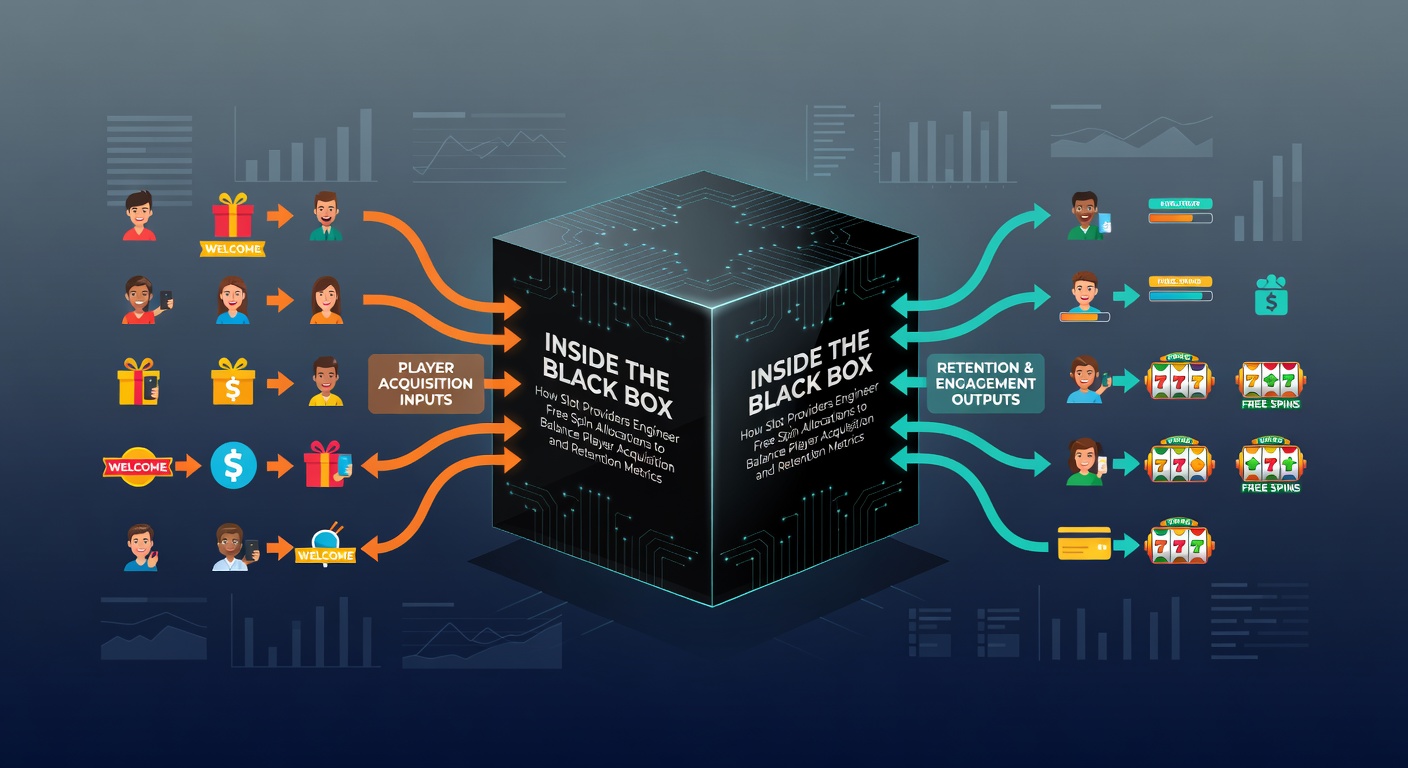
Slot providers rely on sophisticated algorithms to distribute free spins across player bases, and these systems draw on real-time behavioral data to adjust offer frequency, quantity, and eligibility thresholds while operators monitor key performance indicators such as acquisition cost per user and average session duration. Industry reports show that providers collect thousands of data points per session including spin velocity, bet size patterns, and device type, then feed those inputs into predictive models that forecast churn risk and lifetime value.
Core Mechanisms Behind Free Spin Distribution
Providers segment users into cohorts based on deposit history, engagement velocity, and response rates to prior promotions, then apply tiered allocation rules that grant higher volumes to new registrants during the first seven days while tapering rewards for established players unless reactivation triggers activate. Data from platform telemetry indicates that acquisition-focused bursts often feature 20 to 50 free spins with low wagering multipliers, whereas retention campaigns deploy smaller batches of 10 to 15 spins tied to milestone achievements such as consecutive login streaks or cumulative wager thresholds. These rules operate inside proprietary engines that recalibrate daily using machine learning outputs trained on aggregated anonymized datasets spanning millions of accounts.
Acquisition Tactics and Their Measurable Impact
New player offers typically emphasize immediate access to free spins upon registration or first deposit because conversion tracking shows elevated sign-up rates when spins appear in welcome sequences, and operators measure success through metrics like day-one retention and first-week deposit frequency. Studies conducted by research firms in North America and Europe reveal that acquisition campaigns achieve cost-per-acquisition reductions of 15 to 30 percent when free spin quantities align with regional player preferences documented in market surveys. Providers therefore calibrate spin values and reel configurations differently across jurisdictions, for example favoring higher volatility titles in markets where players demonstrate tolerance for larger variance outcomes.
Retention Engineering and Churn Mitigation
Once players move beyond the acquisition window, allocation engines shift emphasis toward personalized triggers that activate when session frequency declines or when predicted churn probability exceeds internal thresholds, and these interventions often combine modest free spin grants with loyalty point multipliers to extend playtime without inflating bonus liability. Longitudinal analyses published in gaming technology journals demonstrate that retention-focused free spin programs correlate with 8 to 12 percent improvements in monthly active user counts when timed to coincide with individual play pattern deviations rather than fixed calendar schedules. Providers integrate these signals with cross-device identifiers so that a player who reduces mobile sessions receives desktop-targeted offers that reference prior activity on the same account.
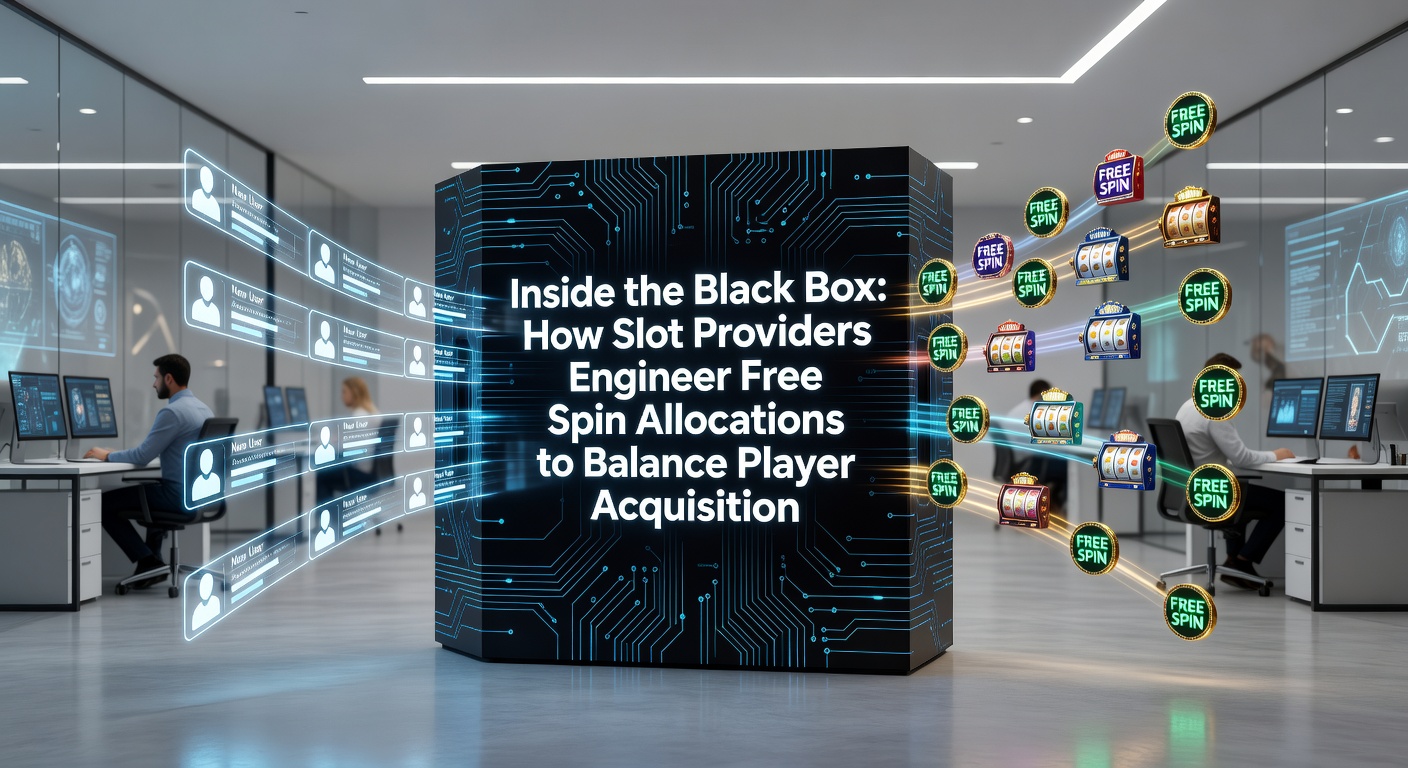
What's notable is that many systems now incorporate external economic indicators such as regional employment rates or seasonal spending patterns to modulate generosity, and this layered approach allows operators to maintain consistent return-to-player percentages while varying promotional outlay. In May 2026 platform updates rolled out by several major suppliers introduced dynamic caps that limit total free spin exposure per cohort based on real-time revenue pacing, thereby protecting margin targets without abrupt offer withdrawal that could trigger player dissatisfaction.
Regulatory Context adn Industry Standards
Regulators in multiple regions require transparency around bonus terms, and operators must document how free spin allocations influence game fairness metrics submitted during licensing renewals. The American Gaming Association compiles aggregate data showing that promotional play constitutes a measurable share of total handle, while the Australian Gambling Research Centre publishes periodic findings on how bonus structures affect session length across different player segments. These reports supply benchmarks that providers reference when refining internal models, although exact allocation formulas remain confidential as proprietary intellectual property.
Future Developments in Allocation Technology
Emerging techniques include reinforcement learning agents that test thousands of allocation variants in simulated environments before live deployment, and early adopters report faster convergence on optimal balance points between acquisition spend and retention lift. Observers note that integration with responsible gaming tools now flags accounts exhibiting rapid escalation in bonus consumption, prompting providers to substitute cashback or tournament entries for additional free spins in those cases. Such safeguards align with broader industry efforts to maintain sustainable engagement metrics while complying with evolving compliance frameworks across North American, European, and Asia-Pacific markets.
Conclusion
Slot providers continue to refine free spin allocation engines through iterative analysis of acquisition costs, retention curves, and regulatory requirements, resulting in increasingly granular systems that respond to individual player signals while preserving overall business objectives. Ongoing technological advances in data processing and predictive modeling suggest that future iterations will achieve even tighter synchronization between promotional investment and measurable player value metrics.