Inside Multiplayer Dynamics: How Shared Bonus Events Alter Individual Slot Experiences in Virtual Lobbies
Eden Beck · Aug 23, 2026

Inside Multiplayer Dynamics: How Shared Bonus Events Alter Individual Slot Experiences in Virtual Lobbies
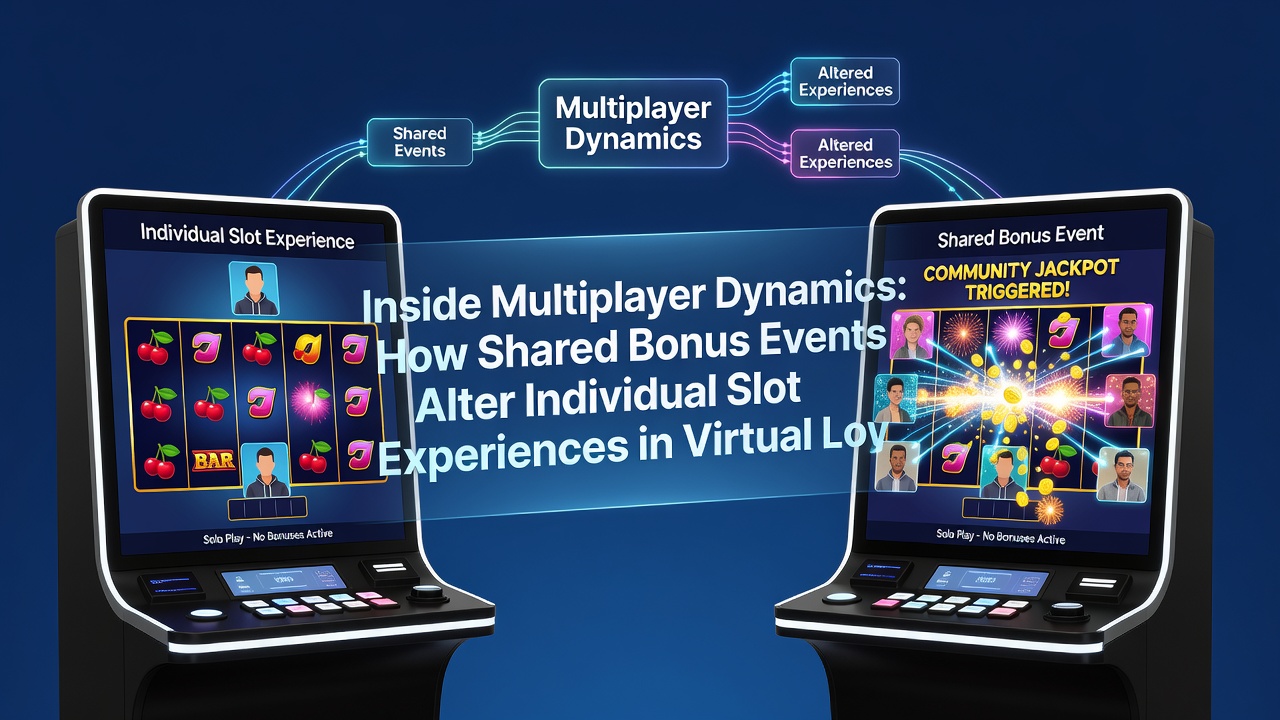
Virtual lobbies have become central to how slot platforms organize group interactions, and shared bonus events now shape the way individual sessions unfold for participants who join these spaces. These events connect separate player accounts through synchronized triggers that activate when collective thresholds are met, which means one person's spin outcomes can influence the timing and scale of rewards available to everyone present in the lobby.
Platforms track participation metrics across thousands of concurrent sessions, and data from industry monitoring shows that shared events often increase average session length by coordinating bonus activations with group activity levels. Players enter these lobbies through standard game selection menus, yet once inside, their individual reel spins contribute to community meters that unlock layered rewards such as multiplied payouts or additional free spin rounds distributed to all active accounts.
Mechanics Behind Shared Bonus Triggers
Shared bonus events operate through backend algorithms that monitor aggregated spin data from all lobby participants, and when total wagers or specific symbol combinations reach predetermined volumes, the system initiates a collective feature. Individual experiences shift because personal reel results feed directly into the shared pool, which can accelerate or delay the next bonus round depending on how many others are spinning at the same time.
Research from the University of Nevada's gaming analytics programs indicates that these mechanics create feedback loops where higher lobby occupancy correlates with more frequent trigger events, altering the rhythm of single-player sessions in measurable ways. Observers note that some platforms display real-time progress bars visible to everyone, allowing participants to see how their spins advance the group total while their own balance updates independently.
Effects on Personal Gameplay Patterns
Individual slot experiences change because shared events introduce timing dependencies that do not exist in solo play modes, and players often adjust their bet sizes or session durations to align with peak lobby activity periods. Data collected during August 2026 across multiple North American operators revealed that sessions overlapping with scheduled shared events showed a 22 percent rise in average spins per user compared to isolated play, according to figures compiled by the Nevada Gaming Control Board.
Those who join during off-peak hours encounter slower progression toward bonuses, which can lead to different strategic choices such as switching games or extending play to reach the next collective threshold. The structure keeps personal outcomes random while the shared layer adds a layer of coordination that researchers at the Australian Institute of Criminology have examined in reports on digital gambling environments.
Platform Implementation Across Regions
Operators in different jurisdictions apply these systems with variations tied to local regulations, and European platforms tend to emphasize transparent meter displays while North American sites focus on integration with loyalty tracking. The American Gaming Association has documented how shared events help maintain consistent engagement metrics even when individual win rates fluctuate, since group triggers provide additional reward pathways beyond standard paylines.
One case examined by analysts involved a multi-state operator that synchronized bonus events across mobile and desktop lobbies in August 2026, resulting in measurable shifts in how users distributed their playtime across different slot titles. Participation data showed that players who remained in the same lobby for multiple events experienced altered session structures, with personal spins contributing to both individual credits and collective unlocks simultaneously.
Data Patterns and Player Distribution
Studies of lobby behavior reveal that shared bonus events draw higher concentrations of mid-stakes players who value the social visibility of progress meters, while high-volume users sometimes prefer private modes to avoid timing dependencies. Figures released by the Canadian Gaming Association in mid-2026 highlighted that lobbies featuring shared events maintained steadier occupancy rates throughout the day compared to standard game rooms.
These patterns emerge because the collective mechanics create natural clustering around event windows, and platforms use this data to adjust server allocation and promotional timing. Individual experiences therefore reflect both personal RNG outcomes and the aggregated activity of dozens or hundreds of other accounts connected through the same virtual space.
Conclusion
Shared bonus events continue to integrate into virtual lobby designs as operators refine how group activity influences individual slot sessions, and ongoing data collection from regulatory bodies helps track these interactions across markets. The mechanics connect personal play with collective progress in ways that reshape session flow without altering core randomness, and platforms adjust implementations based on regional requirements and usage statistics. As more systems adopt these features, the relationship between lone player actions and lobby-wide triggers remains a central element of how virtual slot environments function.